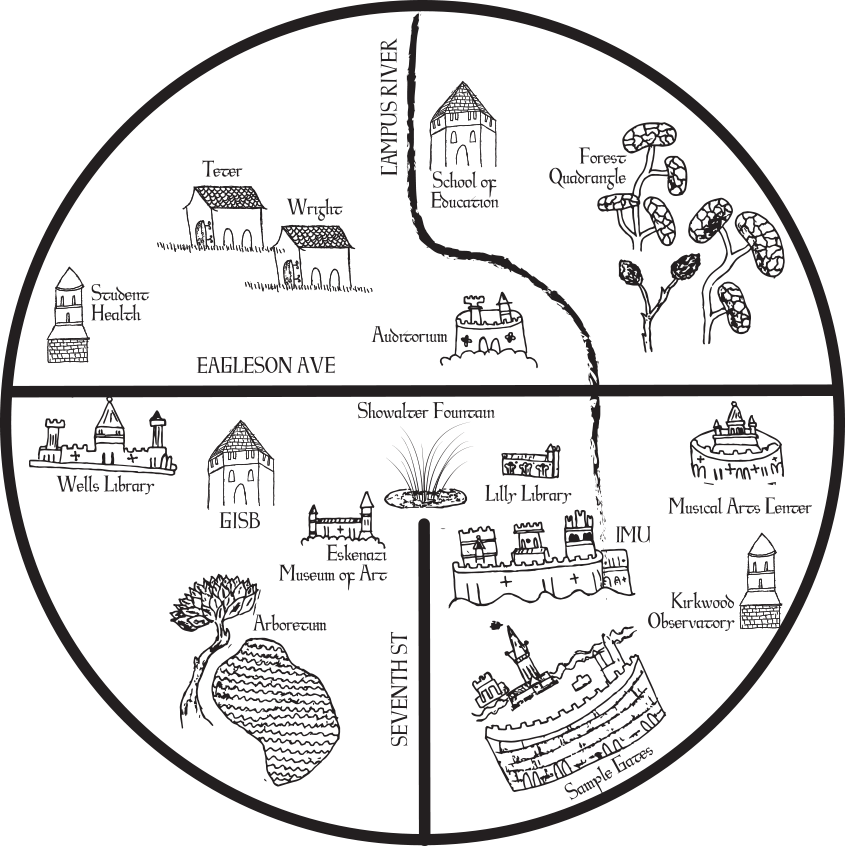
This fountain isn’t crowned by a mermaid. She’s got two feet! (And six fishy companions.)
Festivals and pilgrimage sites go together like fish in water. Bonus: there’s almost always a marketplace with food stalls and fun activities nearby!
The medieval parallel

Nachi 那智, on the southern end of the Kii peninsula in Wakayama prefecture in Japan, is a waterfall and sprawling shrine-and-temple complex that features on not one, but two pilgrimages:
- The Kumano Sanzan/Three Mountains of Kumano. These “mountains” are widely known by the names of their shrines, which are, in turn, part of a broader pilgrimage site called “Sacred Sites and Pilgrimage Routes of the Kii Mountain Range” that was designated a world-heritage site in 2004. Aristocrats and royals living in the capital Heian (now Kyoto) started going on pilgrimage to the area in the second half of the 11th century, and it has drawn pilgrims ever since. Although the complex fell into disrepair and had fewer visitors in the 20th century, the world-heritage designation has encouraged a revival of pilgrimages on the mountain trails.
- The Saigoku Kannon / Western Kannon pilgrimage route. Thirty-three (33!) temples enshrine manifestations of the bodhisattva of mercy, Kannon (Skt. Avalokiteśvara, Perceiver of the Cries of the World). Seigantoji, the Buddhist temple at Nachi, is the first stop on the itinerary. While pilgrimages on this route began later than on the Kumano route, it’s still very active today.
Photos of the waterfall and surrounding shrines at the Kumano Kodo official site offer a glimpse of its beauty, and pilgrims both medieval and modern collect stamp-talismans at each shrine.
The Nachi shrines saw several different periods of historical activity:
- Initial pilgrimages began ca. 1050
- A period of intense pilgrimage activity between 1100 and 1570
Like Nachi, Showalter Fountain has an iconic water feature and is built for a walk-by and a longer visit. It’s common to hold festivals on shrine or temple grounds in Japan, and there’s always a market attached to them, so it makes (Japanese) sense to have a festival around a pilgrimage site. Showalter also has three different buildings facing it that match with the modern and contemporary organizational structure at the Nachi site. The core feature at Nachi is the waterfall, but there are three distinct religious institutions located around it:
- Nachi Taisha, located at the end of the traditional approach, which is a hike along a cedar-lined path from the area where the paddy-fields above the town of Nachi end. The IU Auditorium at the end of the circular drive around Showalter is a good parallel.
- Seigantoji (Buddhist) next to Nachi Taisha are located on a broad ledge above the waterfall. The iconic pagoda that’s often photographed with the waterfall belongs to Seigantoji, in much the same way that the Lilly Library is often a backdrop for photos of the Showalter Fountain.
- Hiro Shrine (Shinto), at the bottom of the waterfall anchors the plaza, like the Fine Arts Building and Eskenazi Museum of Art.
Different areas and organizations jockeyed for influence from the beginning, but this clear division — both between institutions but especially between Buddhism and Shinto — is distinctly modern.
Find someone near you who can help you learn more
- Max Moerman, Localizing Paradise (University of Hawai’i Press, 2005)
- Barbara Ruch, “Medieval Jongleurs and the Making of a National Literature,” in Japan in the Muromachi Age, ed. John W. Hall, 2nd ed. (Cornell University Press, 2022)